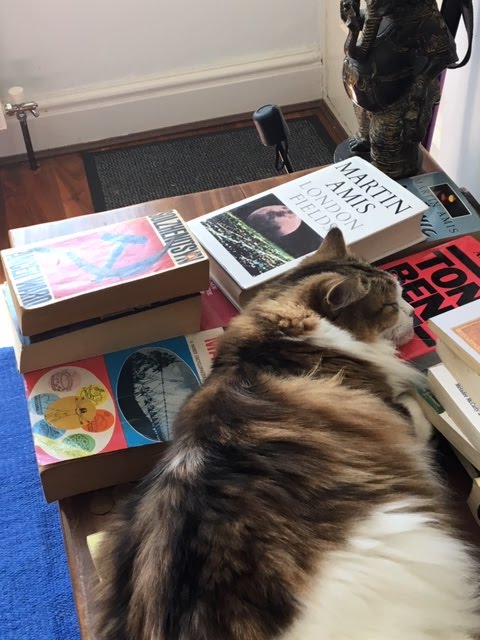
Boo boo in select company

Boo boo in select company
Something to say?

Thursday, 19 August 2021

War brings my cousins home


 My uncle, Achan's elder brother, Sankaran Velyachan,, ran away to Malaya, in his late teens. He had good reason to run, rumour hath it. A maid in his house got pregnant and he might be forced to marry her, being the only bachelor in the house. So, he persuaded his sister to part with her gold necklace, sold it, and bought tickets to Malaya, before the elders in his household had added 2 and 2 to make 5.

   A few years later, in Singapore, he became a doctor, licensed to practice medicine. This was not an uncommon story in the nineteen-twenties. From my father's family, two more young men ran away in search of fame and fortune. One worked in the post office in India when he returned home in the late forties after the war in the East had ended. The other didn't wait for the war to end; he returned to Madras (now called Chennai) in 1944, in a Japanese submarine, armed with many toys-for-spies. Actually, he just wanted to go home; he abandoned his spying goodies on reaching Madras, and forever after, was known in his village to which he vanished, as Japan-Balan. He was my father's nephew and I I knew him well. He was handsome, lazy, good-natured, and often drunk. But, there was no guile in him.

   During the second world war many families were split up, with the men stranded in Burma, Persia or Malaya. My uncles's wife, however, was with him when the war started. He was in Penang and Singapore and Sungei Patani, working in rubber estates, until he returned to India after six years, with many hair-raising tales about the Japanese army in Malaya. 


Photo specially taken for the edification of Velyachaan and Velyamma. We were dressed up for the event. Appu, being male, got pride of place on the chair. Of course.


   In 1940, Velyachan sent his two children, aged six and nine, to Thalassery for their education. There were no schools on the rubber estates where he worked. So Achan became their beloved Elayachan (younger  father.) Achan loved those two, Appu and Mani. (Sometimes I was jealous of Mani.) They melded into our extended family and I now had siblings. A money-order and the odd letter arrived every month for my father. When Japan invaded Malaya the letters and the money stopped. Subsequently, my father went to jail and money became a rare thing.

   Velyachan and his wife, Velyamma, Ammu, were stuck in Malaya for six years -- when they returned in 1946, Velyachan's mother had died, and us children were now savvy teenagers. My father and I were sad when Appu and Mani went away with their parents in the direction of Velyamma's home in Ottappalam soon after. After that, I saw my cousins only during brief visits every year. I missed them; my father missed them.

   UNTIL, both Appu and Mani became old enough to travel on their own. They ignored their parents and made a bee-line for my Achan's house and the town where all their friends and family lived. Velyachan gave them an education and lost their loyalties. 

   As I grew older, I travelled to India from wherever I was posted, once a year. I went straight to Mani's house. Wherever she was, was home. 

   She died two years ago and I now have no great desire to go to India.

Sunday, 15 August 2021

Freedom, they Call it

 Today, it is not my father, I remember. It is Sankarotty Nambiar. Yes, my father went to jail. Along with two others, a lawyer and a businessman. There was deprivation and anxiety. And madness and death for my grandmother. 

BUT -- I recall my Achan, (father,) talking about his imprisonment, first in His Majesty's (King George, the V1th) prison in Vellore and then in Tanjoor. They were well-fed and not locked up in rooms, he said. they were allowed access to the kitchens and to newspapers. (until the British lost Andamaan Islands, briefly, to the Japanese, and the Government did not want any more news of defeats reaching the prisoners.) My father also told me about his friend, Sankarotty, who was not a professional, a lawyer or some such -- he was a congressman, who had no particular job, like so many in India at the time.)


My Achan - raising the flag on Independence day, at the Tellicherry maidanam, '48 or '49. I was in that crowd somewhere. He often wore a top, over his jubba, like Nehru did. So Thalassery folk called him Kundilal Nehru.

Sankarooty was not identified as a 'class one' prisoner, like my father. He was treated cruelly. Not enough food, knocked about by the warders often, locked up. Apparently, the warders would bring rice and a thin curry to the likes of him, then take it away before they could eat it. A game they played. The rice was full of sand and stone.

I once asked Sankarotty why he was not married. My achan shut me up. He was in prison during the years when he would have married, or got a job, my achan said later. Achan found him a small job at one point. And in our house we had standing instructions: whenever Sankarotty came, we had to welcome him, feed him, and give him a bed. I remember him, always clothed in Khaadi, carrying a kind of dignity on him. He was one of many. Many men lost their youth to the freedom movement; I don't think they dwelt on it.

Even in our household, there were tragedies not spoken about. Achan was away for two years; he was the only wage-earner, who sustained an extended family of sisters, nieces and children. In those years, we had no new clothes, no fancy food... Once, in school, I needed to dress up in a decent frock for a concert. The nuns borrowed one, a pink satin one, from a girl called Sourya. The satin was, well - satiny. I glowed in it. 

My Achamma (paternal grandmother) firmly believed Achan was being beaten up by the warders. She never had any love for her daughters who cared for her; the sons were her precious children. One died of small-pox when he was twenty-two years old, another was a doctor in Malaya and the family had no news of him for a long six years, while the second world war raged in Europe and later, in Asia. So, when the youngest, Achan, went to jail, she lost it. She went mad and died before he came back.

When Achan came home in 1944, he was anxious that his fledgling law-practice would have been wiped out. He need not have been afraid. Every week, the other lawyers in Thalassery, sent him briefs, till he built up his practice again. Thalassery offered love and respect to him all his life. And, all my life, roam the world as I have done, I have loved that little seaside town.

However, when we celebrate freedom, I HAVE to think of all the women who are second-class citizens in India, pushed around by the men. I think about the house-servants who do the dirty jobs the rich don't want to do - like the woman in Bangalore sweeping up dog-turd into a torn newspaper from the street. She had no gloves or bin bags.

So, freedom, yes. And we have gone a long way to better living for all. Still a long way to go.

Wednesday, 11 August 2021

The Ubiquitous Messi today

 Lionel Messi rules the airwaves today. If there was an easy way of stopping this Messi madness, I'd try. Now don't get me wrong. I am a footie aficionado, in stops and starts. When Liverpool plays, I'm there in my recliner singing 'You'll never walk alone,' tunelessly. My daughter is counting the hours for the Arsenal-Brighton game on Friday.

   Messi is a great footballer, but how many times do I need to hear that. I liked Messi, particularly when Liverpool beat Barca in the Champions League match at Anfield, and Messi left the field in tears.However, right now, the media have gone crazy. I have to surf the T V to find a channel where I can find out how many new Covid infections there are today, where Boris Johnson might be hiding right now, how Modi manages to befuddle Indians with his version of militant Hinduism...  

   I have to confess: I am a news addict. My daughter has to remind me frequently that the news does not grow or change every half an hour. I am not entirely sure she is right -- the Taliban is changing it in Afghanistan, weather is creating chaos in many countries and Covid is still growing rampantly in some countries.   

   So my daughter placed a T V in my room and I can safely indulge without disturbing wall-to-wall sport in the living room. 

   Continuing on the subject of the deification of sportsmen, was it Bertrand Russell who said that sportsman have now taken over from the Gods of many religions? Clearly we all want something / somebody to worship. However, there are so many figureheads we can look up to. The authors, singers, artists, speakers, all of whom at their best can draw us in and allow us to experience a glimpse of something amazing, briefly. 

   I have been lucky, having been exposed, quite by accident to many cultures and their gifts. There was Carnatic music in my childhood in India, where there was a tradition of singers being invited into a house to sing to a small community of people who lived near by. My father did the inviting a few times.  Then there was Binaca Geethmala and Yesudasan's incomparable Malayalam songs. Later I came across a collection of arias sung by Pavrotti et al and got hooked. 

   In Enugu the Sacred Heart nuns introduced me to Easter music, and in Egypt, killing time at an airport, I heard Arab music that kept me spellbound. The Beatles came as a shock to the system and in Sierra Leone, I learned the rhythms of West Africa.

   There was also the Bharatha Natyam, wherein the ankle-bells on the dancers jangled and the feet went at the speed of sound. And authors like Hilary Mantel, Bertrand Russell, Jumpha Lahiri, Salman Rushdie and many others. I admit that a goal curving in at a sharp angle, with the grace of a bird in flight belongs to this category of special experiences.

   So, yes, Messi. But enough now. I am looking forward to the Liverpool strikers showing some form on Saturday.


Thursday, 22 July 2021

Facebook, Instagram, and all else

 Facebook, Instagram, and all else

Before the colonization by Facebook and its side-shoots, we had e mail. And that was a great boon. I was working in various African countries where a reliable water supply was a wonder, during the years 1983 to 1998., leave alone communication systems. Mail did not go anywhere much in any direction in the little towns, far away from civilisation, that I was posted to. 

From Makeni, in the north of Sierra Leone, I travelled to Freetown once every three months or so. I would go to the local telephone house and book a call to England. At the counter I would be given a slip of paper with the number, which denoted my place in the queue. Then you sat on a bench and waited until you were given access to the one telephone available. I was in S'lone for five great years. When my ex-husband got lung cancer, and died, the office was informed by phone and had to sent messages to me by hand of a driver. 

The next posting was to Uganda. There was a phone-line in my house on the campus of the Kyambogo Teacher Training College, in Kampala. Letters still disappeared into cyberspace, but, once in a way, the phone worked. This was now 1988 to 1994.

The British Council, my employers, felt sorry for us 'advisers' and persuaded a reluctant British High Commission to let us use the diplomatic bag. To a limited degree. No frivolities, only essential family mail. I was once told off roundly by some deputy god in the High Commission, for getting some Maths exam papers sent out to me, to tutor my daughter, who had come down on holiday, just before her G C S E exams.

In Zambia, during 1994 - 1996, I could use the Wi-fi in the office. But none was available at home. E mails were still flashes of sunlight in the atmosphere. They hadn't quite downloaded.

It was in Malawi, in 1996, that a V S O  friend set up my computer with a primitive version of e mail. It rarely worked. Things got slowly better and communication with my children in Laindon became much easier.

Looking back, I managed without any undue sense of deprivation. On my visits to the U K , I started hearing about Facebook. I was not interested, but my family in India had adopted it with enthusiasm. They persuaded me to join, and now, the whole clan could communicate, gossip, commiserate, fall out...

WhatsApp was a similar step for similar reasons. In both cases, I began to enjoy the freedom to hold forth on all things familial or political.

And then, the worm slowly turned. Social Media became a scourge, like a pestilence of ancient times. It attacked without discrimination, destroying the self-confidence of countless young people, who had the usual teen problems such as a changing body and hormones to contend with. Depression in the young became as common as acne.

If I could stop the rancour, make Twitter, Facebook. Instagram... disappear overnight, I would. I rarely post on Facebook. If I do it is generally about my garden, or things about my pets.  I wouldn't miss FB if it went. As for Twitter, in my case, it is just an involuntary twitch.

E mail would be more than enough for my needs. I wouldn't have to be constantly looking over my shoulder with that.

Monday, 12 July 2021

EURO - Who says we lost?

 EURO 2021 - Who says we lost?

Look at the facts. The first 90 minutes of football ended in a 1-1 draw. The next 30 minutes ditto. WE DID NOT LOSE.

As for the penalty shoot-outs where 10 men do a kick-about, does it say anything legitimate about the respective skills or the execution of the match? How CAN it? The Footy billionaires make these silly rules. So, we hit the net with two kicks and Italy succeeded with three. Pretty inconclusive as a way of judging a competition that has gone on over months. Find some way more intelligent and fair, EURO administrators, please.

I am maintaining we didn't lose because my granddaughter is really upset. Her mother too. And I felt like a tyre that's lost air slowly and gone flat. So, I did what I do whenever I don't have even a tentative answer. I take a book to bed. 

O K. Saka should have started. Rice and Mount, both more or less invisible during the match should have been taken out. Henderson should have come on earlier and Rashford too. Indeed what is Rashford doing sitting it out while Kane runs around doing nothing much? Maguire did a much better job encouraging and guiding the team. Kane has got his days, but yesterday was not one of them.

And Sterling? He is normally so good at ducking and diving, dribbling and getting through. He did all that yesterday, but did not find the back of the net.

I will refrain from commenting upon the toxic assault on the black men who missed their penalties. It is beyond my understanding.

Gareth Southgate, I figure, deserves a knighthood for what he achieved.  Have you ever seen our team play as well as they have done in recent months? And we reached the semi-final. Let's win the next competition.

Saturday, 10 July 2021

Old India --old Thalassery


Old India --Old Thalassery

1938. I was three-and-half years old. I am not supposed to remember the day, but I do. There was only one photographer in Thalassery in the forties, and his name was Gunther. (Kodak box cameras were yet to arrive.) His studio was on the top floor of a line of shops on the road to Big Bazaar. The cement stairway to this room was a challenge, so Achan carried me up.

   This old sepia photo brings it all back. It is scarred and faint in places; what do you expect after eight decades? Gunther has a tall tripod with a black cloth to use as a cover for his lenses. He arranges me and my father in a pose -- Achan on a chair and me on a tall stool next to him.. I remember the height worried me, so Achan put his arm around me. Nothing could ever go wrong when I had that arm holding me. 

   My father was a lawyer, just under thirty years old at that time. My mother had died the previous year; after that he took over every aspect of my little life: what I wore, my personal hygiene, my learning, my health, my happiness. He bought the material for my clothes from P A Chettiar's shop, and Shekharan Mesthri, a few doors away, did the tailoring. Another two doors away, on the edge of the bus-stand roundabout was my barber -- no hair dressers then.

   Before bed, my father made sure I washed my feet and had my evening wash. His sister and niece had instructions to remove lice from my hair (I had many). Every night, I had to drink a cup of milk. For many years after my mother's death, Achan lived in fear of my getting the tuberculosis that had killed her at eighteen years. When I was a hefty thirteen year old, to the eternal amusement of the doctor, he still periodically marched me to the doctor to check my lungs. I also had to ingest cod liver oil till I became too fat at fifteen and had to stop.

   I lived in those slips such as the one I was wearing in the photo until I was of school-age. Nobody wore shoes or sandals in those days. Achan had a pair of shoes for the Courts and wooden clogs for the house. Generally, he wore a mundu and shirt, with a jacket as in the photo, on special occasions. In 1981, when he visited me in England, he still wore the same outfit, minus the jacket.

   That was then. Now my grand daughter has a wardrobe full of dazzling clothes and shoes and slippers for all occasions. When I got married, I was barefooted as I had been all my life. I got one pair of slippers to travel to Colombo where my new husband lived.

   Life was pared down and sharing was the order of the day. With family, with poor neighbours, with anyone who was needy.

   I took my father's care for granted, without realising, that in that little town, and at that time, not many fathers made time to nurture their daughters.

   I was lucky.


Friday, 2 July 2021

Our Shameless Media

 Our Shameless Media


My daughter used to love the Today Programme. Now she cringes when she listens. Her morning  listening pleasure is totally destroyed. After listening to the bilge manufactured by the programme to by-pass the Labour win in Batley and Spen, I am embarrassed for them. How do the newscasters, who I assume are well-trained professionals, deal with this level of smoke and mirrors? Have they no professional standards, no shame at what they are reduced to? Why not resign and do something honourable, such as making a huge noise at the footies?

  Once upon a time, not so long ago, we had a news landscape we could be proud of. There was no noticable obfuscation or bias. Now we have a small of group of well-dressed, well-coiffured men and women. trying to mislead a whole nation about the degree to which the present Tory Government is a national disaster. Come -on! A combination of Johnson, Hancock and Gove, with a few Cummingses and Goingses to twist the truth around, and stampede through our country?? I am nostalgic for Teresa May, though I am a confirmed left-of-left, Labour member, and will be all my life.

   I listened to all the news programmes today. No one had the courage to say that after predicting a 7 point advantage for Tories, they had lost Batley and Spens to Labour. In spite of that unspeakable Galloway diverting 22 percent of the vote his way. Do the Muslims in the constituency feel they can trust him? What does he want from all the damage he manages?

   Sky was marginally more professional than the BBC.  Our Bought By Conservatives channel that we all pay for.  Kay Burley was a star when she interviewd the Deputy Chair of the Conservative Party. Like a terrier she got her teeth well into the discussion and tossed the woman about like a wet rag. Well Done, Kay. 

   All the channels want to focus on the leadership discourse within the Labour party. So Labour wins a hard-fought election, I am jumping up and down in the room, chasing up my daughter, who joins me in the celebratory tea-and-toast, and the news is trying to concentrate on Keir's recent problems.

   I am a confirmed Corbynite. But I will be loyal to any Labour leader who is trying to walk the tight-rope that is Westminister politics. BBC tried very hard to make Diane Abbot to say something derogatory about Starmer. But Diane showed breeding and metal; she out-talked the BBC interviewer, who repeatedly tried to force her into a corner. Hats off Diane.

   Has Fox news bought BBC up? If so, may I have my share of the loot?