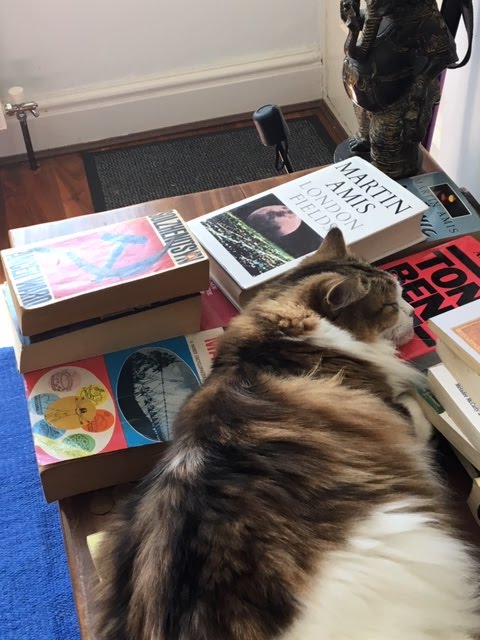
Boo boo in select company

Boo boo in select company
Something to say?

Thursday, 27 June 2013

The English Language

There are some words, fairly recent adhesions to the English language that  really get me going. They touch a nerve and start serious discomfort.

   Girl children? Did we not have a perfectly good word for that since long ago? Are they not girls any more when Aid agencies begin talking about them in connection with inequalities in educational access or Female Genital Mutilation  (FGM is too antiseptic a word to describe this particular horror - let us call it by its real name. This is only for females and it is genital and what happens is horrendous chopping up that some times kills them and leaves them forever handicapped. Sexually. I once asked an African man, an educated one in Malawi about it , and he said, 'If they get pleasure out of sex, they will be rampant. We won't be able to control them.' But then the same man told me his wife was 'loaded, when she became pregnant. I've still to get over that, nausea included.

   And - come to think of it - why does nobody talk of boy children in this connection or any other? So boys remain boys till they become men and we girls have a holding place till we become women. Like purgatory. Ah well!

   Mind you - the boy word has its own indignities connected to it if you have ever lived in Africa as an expatriate. In South Africa all African men were boys irrespective of their age. 'Boy!' the white bwana shouted and the ageing steward actually limped in to answer that command. All over Africa, North and South, this word was copied by many expatriates. 

   And in sport, I have noticed, the men are all 'boys' even if they are at the fag end of their sporting lives, Tendulkar, Steven Gerrard, those huge forbidding Rugby players that look like mountains - all boys.

Back to my favourite language: My writing group once said to me that we should , each of us, have a writing buddy. Buddy? Thank you, no. A writing partner, yes. But buddy I can do without. As I said, it makes me itch.

Then there are the nouns that have become verbs. Now you can access something on the phone or computer. Maybe even gain access? How many of these are we letting in? Soon I shall have serious confusions if I try to 'parse' a sentence. (That's a childhood pastime that has vanished.) The nuns insisted you had to find the verb and the subject pretty quickly, or else you were lost.

   I guess that is enough of a moan for a day about things most people take no notice of. It's me from another century being cantankerous as the old are expected to be.


Saturday, 22 June 2013

Abduction? I think not.

Now, I have a grand daughter aged eight. I know all about the tug-of-war in parents' minds between the desire to give a precious child freedom to enjoy the world - the parks, the playgrounds, the roads home - and safety- safety from the stalkers, the groomers, the rapists and other predators.

This young man, the Maths teacher, who was given a five-and-a-half year jail sentence yesterday - isn't there any one else who thinks it was a bit extreme? He was silly, stupid, manipulative - all that. But the girl went with him willingly. At fourteen she was fully aware of what was going on. Abduction? I think not.

He was a moron and should not be let loose near young girls. I agree. But adding on four years  of imprisonment for sex with a willing girl?

Did the judge think that in those few days in France before they were apprehended they were teaching and learning about Matrices and Transformations? For heavens' sake!

I know this is controversial and many will jump down my throat in an instant. But where no force is applied and the sex is consensual, should we not make allowances?

Rightly, Steven broke the laws governing the teacher-student relationship. Rightly, he should never be near a school again. And rightly, he should not be in positions where he can influence young girls. So he loses his livelihood and that's quite a big punishment. I thought the fifteen months was about right. Enough to make a point.

The banks who impoverished a whole nation and a whole generation got away with no punishment, certainly no jail sentence. The BBC officer, Hall, got away with fifteen months. For abusing children for four decades. For rape, and all that goes before it and after it.

I hope there will be a few others to see how unjust this sentence is. That stupid man deserves fifteen months, no more.

Sunday, 9 June 2013

Bookless in Blantyre

When I think of dying there are two things I am sad about: all those books that will be written after, that I shall not get to read, and all the music I will never hear. Hutchens, approaching death with stoic rationalism apparently moaned the fact that he would not see his beloved England, as cancer slowly destroyed his voice, that which he considered most himself, relentlessly. Is there a part of this world I shall miss? All of it, I suppose, so in an odd way, no special part of it. 

  Before I die I would love to visit China and see whether there are any smidgens of Taoism still left there, hiding in little village huts. Are there people out there enjoying the every day physical things, like scratching an itch vigorously, that Lin Yu Tang once commended? Listening to the bull frogs' chorus during the rainy season, nicely cosy in bed; watching the rain flies descend in swarms for that brief pre-rain flurry, straining to hear the crickets at sundown while shutting out all other sounds - these are the things I must seek in the next few years. I seem to have lost that quiet place inside me to the cacophony of urban life.

   But what is there to be done about all those yet unwritten books? There are clearly journeys on which my Kindle cannot go with me.

   I found out how painfully dependent I was on the written word many years ago when I travelled from Dubai to London, forgetting to pack my reading in my carry-on case. The word-less hours were sheer torture, making me restless and irritable. Sister Benoza at our Catholic High School in India drew vivid word pictures of purgatory, the holding place between heaven and earth. Fires raged there and inmates screamed and begged God for delivery. I had nightmares about the serpents and the fires until I got the measure of Sister Benoza somewhere around standard four. But purgatory is individual, and mine is a place devoid of books.

   The newspapers on board the Emirates plane were all about Gulf news, not a word in them to interest me after the first five minutes. On that trip I learned my lesson.

   On another occasion I read too fast on a plane and finished my book for my flight half-way through the journey. After that I started packing two books for each trip. And then my son gave me a Kindle and life altered gloriously. Now I can sit on my veranda in India and download my reading. I don't have to husband the material and read slowly to save my reading.

   However, long before Kindle, I found myself in Blantyre on one occasion with two weeks of back-to-back workshops to do. I was living at Hotel Mount Soche, which manages to be comfortable and dead boring at the same time. The T V in the room was useless as the remote control could not work. The cleaning staff kept the best ones in store to hand out to guests who paid the largest bribes. I did not know that, so I did not have access to the T V.

   Again, I had left my reading material at home in Lilongwe. On Saturday I wandered around the quiet Blantyre streets looking for a book to read. I finally found a pavement vendor and bought two books from him. At last, I thought, now I can get back to the hotel, order a tray of tea and relax into a book.

   The tea came and I made myself comfortable, with the reading light placed strategically behind my lounger, and opened the book eagerly. It was porn - hard porn intent on teaching me lessons I had never got to learn about sex. I dropped the books in the waste bin and then picked them up again and hid them in a drawer. What would the cleaners think about me if they saw these books?

   I was forced to take them home to burn in my garden. Burn because I would not want my house-staff to think I'd been reading that stuff.

   Today I have solved my insecurities in the book department. I keep one by my bedside, another in the sitting room and a third in the medicine cabinet by the bed. My kindle always stays close to me and I shall never be without something to read.

Friday, 24 May 2013

Layers of Belonging

This last visit to India was off-putting. Something that has been nagging at the back of my mind for many years slowly came into focus. I did not really feel at home in India. Or was it just Kochi?
   So I have to investigate this strange, persistent discomfort in my head - an itch requiring constant scratching. I put off writing about it because I needed to be sure as to what I want to say. I now know this is not going to play out in a day or a week -or a month, maybe a lifetime. So please bear with me while I turn this over - and come to no steady place in the end. I know I will keep coming back to it.
   Kochi is a rich place where hordes of poor live. It is noisy, brash, cold-blooded, and in places beautiful. It is a buy-buy land. If you have money you buy. Whatever is current: flat screen T Vs  (the third one in the house) and Samsung mobiles are the latest. I feel no part of all this affluence.
   Yet I have lived in Kochi for five years in the early 2000s. And I still go there every winter, escaping the British ice-age. I speak the language and know the scams. I know how to haggle with the fish man and greet the old man. I love the food, the clothes, the colours and above all the back-waters and the Marine Drive, where the young and the old come at dusk to sit on the parapets and watch the sun descending. To this extent an outer layer of me fits in. I am not an alien. It's just that I am No Longer at Ease. As the wonderful Chinua (Achebe) would have said, if he had not gone and died on me last year. (There are some people who should never die; for me, he was one. Perhaps he never will, living on the sensibilities of the likes of me, who spent years living in the Eastern Nigerian bush.) How well he expressed that sense of fumbling alienation of the returnee. And Adichie (Chimamanda Ngosi), I am looking to you to keep that fire burning.
   It's just Kochi, I tell myself. Go to Thalassery and I am OK. And this is true, to a point. I melt in, I belong. Or so I assure myself. An inner layer of me is at home. Why then do I have to question all the parts when the whole is so familiar, so right? I scratch at my discontent and I know it is all the things which Thalassery is not.
   It is my fault that I am not interested, except as a visitor, in the Indian news, even when I think NDTV is so professional. I enjoy the aggression of the anchor, good old Barka and Sardesai and the rest. But where is BBC news and my favourite Channel 4 and Jon Snow? What are the Conservatives up to now? Is the NHS breathing its last? And is education still vaguely what I remember it as, when I taught in Wickford and Dagenham a lifetime ago? Unleash Jeremy Hunt and Gow on the nation and you have to hide your children and old people away in safe places.
   And the sad part is: I am certain I DO NOT belong at all in Britain. Neither the Labour one or the present mess. Though the old mess was a better and kinder mess. 
   All those years when I worked in many countries in Africa - did I belong there?  I knew they were temporary, so I did not try to find out. There was a job to do, so get on with it. And when it was over, thank God for safe drinking water out of the tap and twenty-four hour power back home.
   Sadly, I am coming to the conclusion that people like me belong nowhere. We who have been wrenched from our birth-countries early in life can no longer anchor ourselves elsewhere. We try to attach ourselves, we copy the behaviours of locals and proclaim ourselves even more suspect.
   Maybe I have to be content to be part of that huge diaspora of people who have left home and have never really gone anywhere. Vidya (Naipaul) has talked about it eloquently, sometimes whined about it. How can I equal him? Leave it to the experts.


Thursday, 11 April 2013

Keeri - Passport for a Cat

Meet Keeri. There she is, sleeping on my front veranda in India. This kitten came to us asking for food, raucously, almost screeching at me. She knew her rights under UN regulations, I suspect. She was on the far corner of our garden wall. My son and I saw how skeletal she was and I asked him to stay with her while I ran inside to fetch milk and bread. I knew she would, at that moment, eat absolutely anything.

   'I don't want her taking up residence,' I said. 'We are leaving soon after all.' We left the food and escaped.

Half an hour later Keeri was on our front veranda step, talking about the weather, the cruelty of the human world, news in the feline towns... We ignored her. She just jumped into a lap and went to sleep.

   Me and my family , now, are definitely cat people, but we did not want another cat in our Croydon home. Two were bad enough. One, Pepper by name, strays on to the road and cars screech to a stop on either side of her. When she is lucky. One night she wasn't and lost half a hip bone. She is incontinent when scared. So about once a week there is cat-pee to clean up.

   The other, Boo-boo, my son says, is a mouth and an arse connected by an alimentary canal. She'll eat anything and needs constant food. Both think all the beds in the house are theirs and we are just allowed on them now and then. This morning Pepper woke me up at seven in the morning so she could go out for a wander.

   We named the new little one Keeri for mongoose in Malayalam. She has that charcoal-ash colour and a pointy tail. 

   This cat, now, is closer to the human genre than the others. When she sleeps on the bed, her head is on the pillow. When Saraswathy wants to remove my night-dress for washing from the bed where I have thrown it, Keeri hangs on to it. It's hers. Like a child's comforter. Saraswathy generally loses the battle.

   When visitors come, she unerringly picks the cat - people and abandons me. She is a promiscuous little one and I shall have to stand in line for her favours.

   The airlines want to know what breed Keeri is before they will transport her to England. Local, I answer. But that is not enough. Look at her, for heaven's sake. She is an unremarkable stray that can't even boast a respectable tail. But she knows how to wake up my grand daughter to play with her and run straight into a lap without brakes on, when the neighbour's dog barks.

   I am travelling next week and I face a week of jet lag. Keeri will usurp my rocking chair. I shall run around like a mad head-less rooster for her 'papers', but I can't wait to see her. I hope she doesn't mind the English weather. If she does I am going to hear about it. Loudly and frequently.

Tuesday, 9 April 2013

Thatcher - an exercise in hypocrisy

Soon after Margaret Thatcher became Prime Minister I went to work in Bishop Ward Boys' Secondary School, Dagenham. I was moving from Wickford, a reasonably prosperous commuter town. It was a huge culture shock, and as the years went by the shocks to the system became more and more painful.

     Bishop Ward had a catchment area, which was almost entirely employees of Ford, Dagenham. Most of the children were Irish Catholics and so was the Head Master. Many of the  parents lost their jobs as Ford closed down and we had practically a whole school living on the dole. The families were big, six and seven children in some of them, wearing hand-me-downs and looking under-nourished.

     Thatcher's England brought devastation to England's working class. She is now praised for taking on the miners, the unions... As far as I am concerned, she could have taken on anyone she wanted, if she could have done so without destroying the very fabric of British society. I think of all those workers going about saying -gi'us a job.

     We lost our industrial base during those years while she nurtured the money-men. London became a strutting city of illiterate money-mongers. The language of the media and newspapers changed, as money became the biggest news of all. Today we know what happened to that unrestrained greed and how it has affected ordinary people. I don't call them working class - where is the work for them?

     Thatcher , the milk snatcher, charged ahead, blinkers on, knocking down all industry in her wake. The mines went, the motor industry went, the steel went... British people are some of the most original and inventive in the world, but they now have to take their patents to the  United States to see them developed. We are too busy counting money.

     Thatcher had no regard for the South African black people who were being trampled by the Apartheid regime. She thought the ANC were terrorists and she cosied up to the Prime Minister of South Africa. And we are supposed to honour her with a state funeral? For that alone she should be relegated to the ranks of the unfeeling despots. And she was a despot - ask her cabinet and they will say that in private. After all, they got rid of her eventually, not the public.

     I am sorry to hear the Queen will honour her by participating in her funeral - what a sham! I wonder which Adviser takes the credit for that piece of hypocrisy.

     The celebrations in Bristol and Glasgow make me sad. Nobody's death should be celebrated. But I wonder: is it because of the exaggerated eulogising that is happening since yesterday.

     I feel sorry for Margaret Thatcher as a person. Dying in the Ritz Hotel. Oh Boy. I hope someone she loved was with her.


Sunday, 7 April 2013

Uninvited Guests

Immigration is in the forefront of news these days, parties vying with each other to prove to the paranoid majority that their policy is the most constructive - or destructive depending on which side of the population class/ line you are standing.

     Uninvited guests - what do they have to do to find favour, to be accepted?

     This was brought home to me forcefully when I got a fault in my boiler recently. The gas engineers come and go: 'Not much wrong with it,' they say. 'It's working, innit?' I am not convinced, so yet again I do a call-out.

     This time the guy who comes has a half-Chinese look, and a name to match. But his English is faultless and the accent pure East End. Second generation, I think. I sit on the hall chair waiting for him to come out in five minutes, dust his hands and ask me to sign the call-out slip. The boiler was working, so he could get away if he was so inclined.

     I had a cup of tea while I waited, read the previous day's Guardian, looked at my mail, had another cup of tea. Mmm. ??? I peered into the boiler area.

     The object had been completely dismantled, its innards spilling out over the utility room floor around the engineer. He spent hours with spanner and screw-driver coaxing it to do better. Off and on he went to his laptop to take readings. Then he went upstairs in search of the hot water system and the controls there. He fiddled for another half hour and fixed a valve that had jammed. He then called down to my daughter to put the thermostat up and down several times till he was certain the instrument communicated well.

     Then he came down and explained to me, in some detail, what he had been doing. I was amazed at his discipline and thoroughness.
     'The horrors of immigration,' my daughter said as he left. He hadn't learned the quick-exit methods. He was still carrying his newcomer's desire to impress.

     I thought of myself in this connection: when I worked in projects for the British Council I had a reputation for being the only Adviser who met deadlines. Other Advisers looked at me pityingly for this serious professional flaw - dead lines were meant to be ignored, weren't they? And why was I bucking the trend? Didn't I have anything better to do? Well, there was that too. I was a bit of a joke.

     Yet - I had come from a country where, if I slipped, there would be thousands to step into my shoes. I had to keep to the rules.

     I worked for the North Thames Gas Board briefly when I first landed in the UK. Fifty-nine pence for an hour, I was paid, and if I did well, I could be trained for a managerial role. God forbid - by the third day, I was fed up of connections and disconnections, of bills paid or in arrears. In my room at the lodgings, I had a gas meter, which ate 50p coins. Almost an hour's wage for three hours of heating. In my head also there was a serious disconnection.

     But times were good - there were plenty of jobs for the young - or even the not-so-young like me. At the big table where I fielded phone calls I was flanked by two Cambridge graduates. They were killing time till they decided how to save the world. This was 1974 and the world even then needed a quick save.

     Periodically they asked me to slow down with my files. 'You are showing us up,' one of them said. 'You work too fast.' So I took a Maths book in to read and when the supervisor was looking elsewhere. I caught up on the new Maths, which I hoped to teach. The floor manageress asked me to join the managerial trainees for the next year. I kept my head down and spent a lot of time hiding from her among the basement filing cabinets.

     Even then I knew: as an outsider I had to work twice as hard just to tread water. And so it is still with all the uninvited guests.