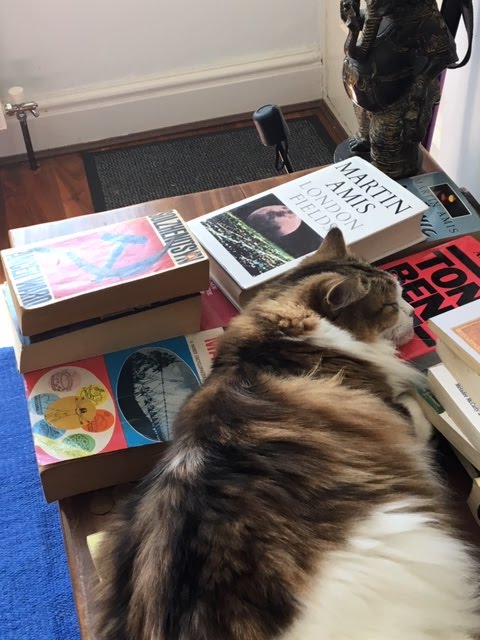
Boo boo in select company

Boo boo in select company
Something to say?

Saturday, 17 November 2012

Cars and Me

I have this theory that our cars say something about us. Particularly the inside of the cars. Kitta's  dilapidated chariot is full of empty KFC cartons and coke cans. Mixed in with that there are papers with Maths scribbles all over them in his thin handwriting. Raghu prefers to take a bus if he can and leaves his car behind. Nothing of him is to be seen in his sixteen year old Micra because he is rarely in it. It is often being used by Manju. Manju's Landrover has little-girl things belonging to her daughter: magazines with ends curling from the damp, odd bits of Asha's toys and books abandoned after reading. My Honda, also 16 years old,  smells of compost and garden things. There is black mud in the back seat and fallen leaves.The Honda is now gone to the car graveyard.

   In 2009, I went to my local garage in India to sell my Tata Safari. It was now eleven years old. The owner of the garage was a family friend and he said it gently: you might get a sale if you paste lots of hundred rupee notes on it. Since then I've rented cars when I go to India. Much simpler.

   My first car in the UK was an old Morris Minor of green-black hue, the colour of cow-dung Indians would say, which I bought from the Lab Assistant at the school where I worked. I loved it. It cost me £240 pounds. Cheap you'd think. But my take-home salary was 120 pounds a month, so I had to borrow from the bank and repay painfully at £20 pounds a month. The car was well worth it and lasted for six years until a man in a hurry drove straight into it at a cross-road in Basildon. He apologised profusely, admitted liability and two days later changed his mind. He owed me for a very long time.

   I was also in a hurry: I was taking my son to his Cambridge entrance exams and I could not hang around. A policeman visited me the evening of the accident for information. He wouldn't talk to me. Naturally. A woman and Indian at that. What would she know about cars? forget the fact that she was driving. So he harassed my son till he got fed up. 'Why don't you talk to my Mum?' he shouted. 'She was driving.'

   The Morris was a write-off and I needed wheels to get me from Laindon to Wickford and back every day. I bought a three-year old Ford Escort for £1600. I had gone up in the world, courtesy of the 1000 pounds Kitta saved up from his holiday job at the Social Security, at nineteen pounds a week. Riches! I kept the car and drove it into the ground. My friend, Bill, often borrowed it and when he was 87, he drove the Escort straight into another vehicle. It scared him so much he handed in his driving license. He died two years later of a stroke. He often said he may have had a black-out when he had that accident.

   My next venture was a VW Polo, again three years old. It went on for ever. Meanwhile I had gone overseas to work for the British Council and my children were all drivers. The British Council let me play with one Landrover after another, the short ones and the long ones. I carried so many colleagues around in them that I sometimes had to kick the back door in to get it to close. I fell in love with Landrovers, lazy hand brakes, leaking roofs and all. 

   On the road to Gbendembu, 27 kilometres from Makeni, the path was narrow and it was rocks all round. Huge boulders on the track and even bigger ones on either side. I did that trip once a week. As the landrover tilted at 40 degrees, I could rely on a flat tyre. I carried a long iron rod with me to put into the spanner to act as a lever. I jumped on the rod to undo the nuts on the wheel. Then I would call the urchins in the neighbouring huts to help me lift the tyre.

   Today I avoid driving but I like to think I can still do it if I want to. Like so many other things that have gone with time: walking fast, chasing after Asha, runng up the stairs, carrying the shopping...

   Let's not go there.


Wednesday, 14 November 2012

Foolhardy or Courageous?

In my intrepid days, when I strode the world like a Colossus, (as Mark Anthony said of Caesar), a trip to Nigeria would have been a minor matter. Like catching a bus to the Whitgift Centre. After all I had lived in Nigeria for five years, what could surprise me? 

   But now, I dread to think I have to travel to Nigeria. I have unfinished business there. The last time I went that way was in 1994, returning from a Gender in Maths (Numbers with little spokes straight or sideways at an angle?) conference in Quebec City. I had been full of vim and professional certainties. But the experience at Lagos airport was unpleasant.

   The queues, if you could call them that, were long and untidy. Near the check-in counters the anxious travellers were milling around without direction. Nobody could find the forms to be filled before you were released out of that airport Babel. The man at the counter had several stacks of A4 size forms next to him and he doled them to each passenger when they reached him. They then filled them up laboriously and he processed it. Each person took a good ten minutes to be waved through. I was in transit, I had forty minutes to catch my connection to Entebbe and nothing was happening my end.

   Between the passengers and the forms to be filled there was a low two-foot-wide wooden bench, about knee high. I climbed the surface to the other side when the man was not looking, grabbed a sheaf of forms and distributed it to all the men and women in the queue. Then I helped the passengers who were struggling with the form. At least they would now be ready for the officer when they reached the front of the queue.

   There was a Canadian lady in front of me and we both came to an unspoken decision almost simultaneously. She stood aside and shouted to the queue in a school marm voice. 'Right. Line up properly.' She made sure there was no pushing and shoving and no bunching up. When she reached the front, (the queue was moving forward fast now) she turned to me and said, 'Now you take over.' So there I was managing traffic in the middle of Lagos airport.

   In the eighteen years since I did some sillier things in my ignorance. On my first morning in Kampala I drove on the right side of the road, out of the College in Kyambogo.; I had just come from Sierra Leone, where you did just that. Three armed guards with machine guns came slowly towards me and stopped my vehicle. Prayers time, I thought; Idi Amin was not long gone from that lovely country and AK 47s always make me feel sub-human. I squirmed, explained myself and was let off with a warning.

   When I went to Makeni from England in 1983 I drove round the little roundabout in the town the wrong way round too. I should have been going right. A little Sierra Leonean urchin came up to me with a scrap of paper. 'You will die if you drive like this; maybe you come in for  some coffee,'  was scribbled on that paper.Who can resist such an interesting invitation? 'Who gave you this note?' I asked. He pointed to the hardware store opposite the roundabout . Thus began a life-long friendship with the Abihanna family. Their home became a place I drove to when I was alone or tired or merely wanted to eat food cooked by someone else.

   I haven't seen them for twenty-six years, my friend Marie, her husband, Simon, or her father and brother. But next year I shall travel to Journieh to meet them all again. Some friends are very special. 

   Marie's son Susu owes me for all the times he peed in my lap. And for the many command performances of 'Hello, is it me you are looking for?'  Marie danced in their sitting room while I sang and little Susu, now definitely Joseph would go to sleep in her arms. 


   Fireflies: Foolhardy or Courageous?Fireflies: Foolhardy or Courageous?

Friday, 2 November 2012

Untidy Lives

Mary was always the leader; Mani followed. Mary-Mani club was the bane of my life when I was in Luanshya, that lovely mining town with its nine-hole golf course and beautiful mining houses set well back in manicured lawns.

  In 1973,  Balan, my ex husband had a graceful, old, rambling, house there and I visited now and then. Mary and Mani were then nine and seven, both ready for the next adventure. Today they are in their late forties. With children, mortgage, in Mary's case, husband - all the appurtenances of growing up.

   Mary is the daughter of Thankamma, my friend who died in 1996. In Zambia Thankamma and I had a mutual help society. We looked after each other's children and without the assistance of husbands, managed a decent life. She was a widow of long standing and I had just left my husband and started living alone in a flat in Ndola. Luanshya was half an hour by car away.

   In the way that children make clean splits impossible I had too much residual business in Luanshya. There was our dog, Lassie there, my former steward was now working for Balan and mutual friends had still not decided who to take sides with.

   Thankamma and I often travelled to Lusaka together, children tumbling around at the back of the car and us gossiping over that cacophony. In Lusaka we stayed at the education department guest house and enjoyed ourselves shopping at ZCBC and ZOK. In those days you could get St Michaels good there and we bought trouser suits and children's clothes. Trouser suits had arrived in Zambia just about the time it became pass'e in the West. How were we to know? 

The Luanshya house came with my ex-husband Balan's job. It had three outhouses and a sprawling, untended garden. The steward, Fison, lived in one of the outhouses with his family of four children. The other two were vacant one - room sheds.There the girls decided to make their club. Glasses, cups, plates, spoons... things just disappeared in there and came back a few days later dusty and mangled.

One day they decided to take a broom to the room. They did a bit of sweeping and abandoned the place. As soon as the dust hit the noses, that is.

But they still had the Blue Moon Hotel (Mary was creative with names.) as well. This was inside the house on the top shelf of the linen cupboard, which was where you kept pillows and blankets.. They had to climb up to get there, sheets and other paraphernalia of house-keeping trailing from short arms. The pillows and blankets got dumped on the floor in passing. If you looked up on your way to the bathroom you saw two little heads - one a curly mop-head, the other largely occupied by two saucer eyes.

Mani got into trouble with me now and then, with Mary in the lead. Once I caught Mani sliding down the concrete banisters outside my second floor flat in Ndola. If she fell, she would have broken her head. She, of course, blamed Mary. I couldn't slap Mary, so I slapped Mani. Mani says that is the only time she remembers me slapping her. Should have done it oftener,  think, now. She insists the worst part of it was I pulled her trousers down, with her knickers, so that the slap met backside.

Looking back, those two girls grew up wild, except when confronted by their mothers. Balan's compound had a huge Poinsettia tree and they spent a lot of time under it. I worried that the pap would be poisonous. When I went for a walk in the evening  I had an entourage of two girls and a dog. Our Lassie. Lassie always left half-way to run back home when the feeding time came.

I did a part-time teaching job at the local technical college when I was living in Luanshya over a long Christmas vacation. Lassie would walk me into the classroom. I would pretend I didn't know her.

Once friends of the children came visiting because it was a birthday. Whose? I don't remember. I made a cake, and Tarun, a guest, then about 12 years old, decided to decorate it. Balan ran a bachelor home usually, so Tarun had difficulty finding the things he needed. The message on the cake was done in purple when the pink colouring ran out and there was no room to write anything after 'happy birthd.' The rest came in very small letters below. Lassie ate that cake up long before it got to the table. Just as well.

Balan pulled his hair and muttered at the vandalism in his store. But the girls were a force of nature. In those days Zambia had a shortage in many necessary things - like toilet paper. So Balan's frustration was more than justified.

The whole set-up was untidy the way separations can be, nothing quite de-linked, no certainties anywhere for anyone. And I didn't care to bring any order into that existence, dysfunctional as I was at that time.

I returned to Zambia twenty years later, in 1994, as a Maths adviser in a DFID education project. The British Council project transport was a long- wheel -base Landrover. I had a workshop in Luanshya and decided to take a look at that old house of Balan's. I was sure that the Landrover would be my credential to get into that compound.

A six-foot brick wall and tall metal gates now hid the house from view. I honked many times, but the guard who finally opened the door wouldn't let me in. Zambia had become a very scary and dangerous place and no one opened gates to unknown vehicles. Gone were the days when I could sit on the veranda ledge and read the morning away, watching the cars come and go in the house opposite.

I finally got out of the car and went up to the guard and begged to be allowed inside. I explained my connection with that house. He let me in reluctantly. The house looked diminished and dull. There were a great many children about - clearly the extended family of the Zambian owner were now living in the outhouses. The Poinsettia tree, which had caused me such grief had grown and spread. The rear wall of the house on which I had practised tennis still bore the scars of years of misuse by people like me.

I felt sad, lost. Balan had died in 1986 and those old battles with him now seemed a waste of living time. In between I had forgotten all the reasons why we quarrelled. I was well into middle age. The only thing I was certain of was that I liked my life better as a single. I was not good wife material. 

Wednesday, 3 October 2012

An Old Women whom I Owe

No, I am not talking about me or Mani, my cousin, who is equally ancient. This is about another woman in my life, who is long dead, and I have always felt, never got (from me) the acknowledgement she deserved. In passing this is also a comment about our matrilineal society (Marumakkathayam), which was abolished more than sixty years ago

     Chiruthai Velyamma: Her name was Sreedevi, but all of us called her Chiruthai. She was my father's eldest sister, who managed my home after another sister, Edayi, a spinister, died early, of stomach ulcers. Mother of course, was never in the picture having died of Tuberculosis at the venerable age of eighteen!

     I called Edayi, (Her real name was Narayani, but everyone called her Edayi.) Ammamma to begin with. Later when I got fed up of not having a mother I made a unilateral decision; I started calling her Amma. She had no opinion on either, having spent her life looking after other people's children, and went on in her unflappable way to make sure that three children, (my father's brother's children, Mani and Appettan, and I), were fed regularly (albeit on conjee and moong in various forms)  even when my father went to jail and the money supply dried up. It was a classic case of loaves and fishes. My father's brother was caught up in the war in Singapore and we didn't see him or hear from him for six years.

     When Amma died I was scared. Who was going to look after our household? Father had come back from jail, but he had to work. Also he was hard to pin down in one place, pieces of him were distributed thinly over so many friends, extended family and Congress party workers. Chiruthai Velyamma had come to look after Edayi during the last few weeks of her life. So I confronted Chiruthai one morning. 'You are going to stay, aren't you? I asked'. And she stayed.

     When I grew up she taught me how to handle my periods and the facts of life, painlessly. I slept beside her as she narrated the stories from Ramayanam and Mahabaratham, while she searched my scalp with two fingers for nits. Those stories live with me and are part of my personality. They gave me a cultural starter kit for life before I reached ten years.
    
 When I was studying for my B.A, she made black coffee with ghee (milk would have run out and there was no 'fridge anyway.) in it and left it in a flask. At four in the morning she got up and made me coffee again. 'You need to sleep,' she'd say. 'Your brain won't function in the exam hall.' (It didn't function anyway.) So we'd make a pact. I would catch a quick nap from 4 to 6 and she would wake me up at 6 again.

     When I had my first baby and I did not know how to hold him, she would sit me down on a mat and give him to me to hold carefully. She was in her sixties by then, but she sat on a palaka, a wooden stool, and bathed him daily, umbilical cord and all. At birth, Kitta's cord protruded when he screamed and I was frightened to go near it. He also screamed a lot.

     She became widowed, she told me, in her early forties. She had married a rich landowner when she was twenty years old and had four daughters. She was his second wife. When he died, the custom was that she should leave her husband's ancestral home before his cremation. So they put her in a bamboo-and-rope stretcher and carried her home, three little girls following the procession. One was already married.

     After that she was dependant on her brothers for support. For five rupees to support her pan habit, she had to ask my father. I used to feel sorry for her humiliation. Still she always spoke with love, of her husband. He was kind and gentle, she maintained. It was just the law that his wealth should go to his nephews and nieces, not to her.

     This woman was intelligent and caring, but they laughed at her and treated her with contempt because she came to them empty handed for succour. She was one of the casualties of that ancient system.

     I am glad, that in her later life, until she died, I was able to treat her with respect and gratitude. I am sorry that I was far away when she died. I should have been there.

Tuesday, 2 October 2012

Uncertain Writing

Writing is like giving birth, I think. The long gestation and the urge to finish it and get it out there - does that sound familiar to women, at least?

     I am tired of this present project. I have written it many times, edited it even more times and when I blink, another apostrophe turns up in the wrong place, a word has lost its last letter in my hurried typing... Remind me never to start another novel again. Pure purgatory.

Monday, 17 September 2012

The Royals

I am nicely tired of listening to wall-to-wall coverage of the William and Kate bandwagon. The media dances around them with their obsequious smiles and forgets to report on the real event: the visit by a future Prince to Solomon Islands. I want to know who is sitting next to him, what they are saying, how it will affect our future policy with this island. But what do we get, ad nauseum? William and Kate and those unfortunate photos.

     Don't get me wrong; I rather like Kate. I like that she doesn't pose or reinvent herself as a clothes horse. A nice-looking woman, who does not use hair spray. And William? There's nothing much  to say about William really.

     If that nameless photographer intruded into private premises, he should be dealt with by the justice system. But why do I want to hear every note in this opera?  Get on with it, press people. You have a job to do. There's Gove and his education turnaround, there's the EC making threatening noises and we'd rather hear about those things. Kate's troubles are not my concern. I don't want to hear about them. Nor do I care what transpires.

     All this brings me to the subject of the British Monarchy, which raises its head now and then from a forgotten corner of my mind. It is impossible not to have a sneaking respect for the Queen. I have always liked her. A grandmother who is doing a good job being that. All the public things she does, she does because this is what the country pays her to do. She can resign and hand over to Charles (Oh my God) any time she wants. So let's not get too excited about her devotion to duty...

     I felt rather sorry for her during the Olympics having to wilt in public at the opening ceremony. And I felt sorry for the Duke, who got ill after having to perform at the age of 91, on that barge and at other functions that week. Leave the man alone, for Heaven's sake. I wouldn't last a day in their roles. 

     What if someone paid me a huge amount of money - and respect - to do all those things? I'd still say no. At two in the morning it's my bed I want, and I am a lot younger than the Queen.

     Seriously - am I supposed to feel great loyalty to any person who comes to the throne, when I know all about their shenanigans in the past, thanks to that same media I moan about? Charles and Camilla? Good luck to them, but after our present Queen, I would be totally republican in my attitudes.

     Harry is another matter. Despite his cock-ups (forgive the pun) he is a natural with the people of other countries. It was a pleasure to see him on his tour. He was totally at ease with the people around him. Hooray Harry!

    Why on earth do we need a Royal Family for when we have a Cameron and a Milliband?


Sunday, 12 August 2012

The Demise of the Sari


I hate to think: in Thalassery it's come and gone, in my lifetime. Taken over by that North Indian aberration called The Salwar-Kameez. Now I know it has its uses, stress on USES, but God help me, what an ugly costume!

   The only people who look good in a kameez are the people who would look good in anything anyway. It makes the rest of us look podgy - more podgy than ever - and yet millions of nice Indian girls declare allegiance as soon as they start talking.

   So the history of the sari - this graceful garment that has been side-lined by the 21st century:
In my house in Thalassery, when I was growing up, there were three women, and all wore mundu and veshti. White of course. Achamma did not wear a blouse but the others did. Achamma did not wear a veshti either, come to think of it. She was topless. If a man entered her vicinity she took a little thorthu and threw it over her left shoulder; she was not concerned where it landed or whether it hid anything. Her dangling pouches were a constant given of my childhood.

   All the women in neighbouring houses were similarly dressed. We were too backward or too poor to think of saris. After all you could get a mund-veshti outfit for three rupees and the sari was a luxury, compared. And it needed under-skirts and blouses to match - sort of. We did not know too much about matching then.

   But then, once every two or three years my uncle's wife, Ammu Velyamma, would arrive from Malaya. Her suitcase - that itself a wonder as it was made of leather and quite beautiful compared to our tin trunks - would contain a rainbow of saris, georgette and chiffon and all things in between. Mani, my cousin, and I, had access at will; we draped it on us and happily tripped over it, till she packed up and went, a whiff of other lands and fashion, which had briefly lighted up our lives. I also liked that she did not show too much respect for the men around - she talked to them on equal terms and they listened. I don't think the women at home liked her much.

   I was fourteen when I first asked my father for a sari. I had graduated from thick and rough Khadar skirts and blouse only recently and this was definitely a bridge too far. But Meenakshi, Jaya and Uma, in my class wore saris to school and I wanted. I blamed my mother for dying - she could have told my father how sari time had come. My father, however, looked amused and scared at the same time, if that is possible.

   Finally I got one when I was almost fifteen. It was white nylon and had huge roses on it - the print more curtain than clothes. What did I know! The problem was it tumbled; it refused to be tucked in anywhere. Wherever you tried to secure it, it escaped, and in inconvenient places, like in front of a roomful of strangers. There is a class-photo of me in that recalcitrant garment; you can see I was more concerned with the sari than the photographer. The class is looking at the lens, but I am somewhere else.

   I learned about the deft use of a nappy-pin much later.

   Now, when I go to Thalassery, the women, all except the Ammammas are in salwar kameez. Like a tribe of penguins. The thing is, it can look great on top of leggings - if you have the legs for it. It also looks great as harem trousers if you dare wear a short, very short ,top and show your belly button. I don't think Thalassery is going to get that far, ever. Is it?

   So who wears a sari now? Well, it is taken out and aired and exhibited at weddings, like a form of extinct life. Women get married in it. But mostly they spend their lives in a nightie, a smocked kaftan , with a frill at the bust for modesty.

   Now that I live in England, I long for sari weather. I have a wardrobe full of saris though I live in Kaftans and trousers and such like. They do nothing for me, only exacerbate my inferiority complex about my existence here generally. When I wear a sari, I glow; I put a pottu on my forehead and a large flower in my hair. I am on top of the world.

   But - this year, I have worn a sari exactly three times. Right, here we go. Tomorrow on, I'm going to wear a sari, every day. If it gets muddy in the garden, it shall be hitched up as we used to do when we played throw ball or tenni-quoit in College.

   Once I played tennis in a sari, in the school were I taught; this was in 1978. My opponent , my Head of Department, insisted the ball bounced twice under my sari before I got the shot in.