Last night it was big-time thumb exercise for me- clicking the remote to find something worth watching. Reality TV, it seems, had done for quality soaps. Upstairs Downstairs, Minder, Love thy Neighbour, The Good Life - all those stellar cameos we now see ad nauseum in repeats till the fun is squeezed out of them - why can we not produce that quality of TV anymore?
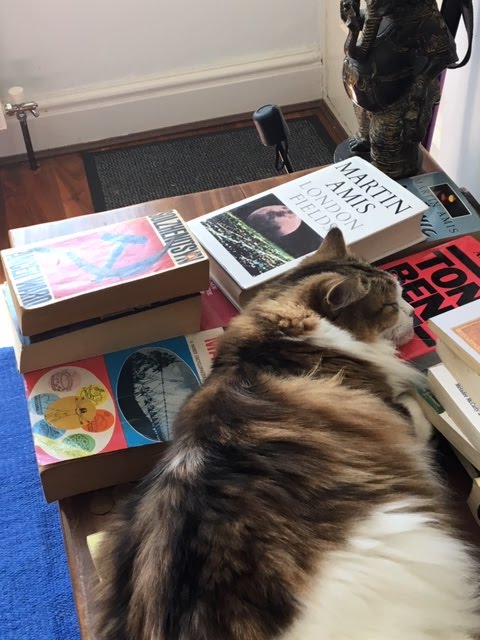
I had just finished a lovely novel by Penelope Lively (How it all Began) and was looking for time-pass till I homed in on the next one. Which was in the end, a P.D. James via Jane Austen's Pride and Prejudice. (Death at Pemberley.) Not sure I like where she is going, but must give her a few more pages before I decide.
All this made me wonder: how did we entertain ourselves before television, computers, videos and the like?
We young girls gossiped a great deal and there was much to gossip about. Remember, in Kerala of that time (the forties), even looking at a boy for too long was a punishable offence. (This was called 'eye flinging.') A fourteen-year-old girl I knew swallowed copper sulphate and killed herself because someone had intercepted a love-letter she had written to a boy in her class .Girls and boys sat in different sections of school and college and did not socialize beyond the odd lending or borrowing of lecture notes. (Lots of scope there, mind you. My first clandestine message was the photo of a boy who lent his Organic Chemistry text book to me, with his photo pasted on the back-flap. Daring! I treated it like hot coals.
Normally we combined hair drying with gossip - the activities blended well. We girls would actually organize ourselves in the back-veranda: take out the wooden foot stools to sit on, find a corner at a safe distance from the adults so that we would not be hijacked for domestic duties... The boys were exempt from all kitchen fatigues. What did they do? Hang out with other boys on the roads? Kick a worn out tennis ball around? There is so much you can do with balls. Excuse the pun, quite unintended.
Times when we girls had our periods were best as we were considered 'impure' and nobody would expect us to fetch and carry, grind the coconut or red chillie on the stone for the fish curry or wash up... Indeed we were not allowed to enter the kitchen, even bathe, till the third day had passed, so we spent the time sitting about in places where the men would not look on us. It would be a bad omen for them if they saw us.
I secreted books to pass the time, but was reprimanded - books would be sullied if touched at that time and the goddess of learning, Saraswathi, would be displeased. Some times my cousin, Thankamani and I would decide to have periods at the same time, one faking it while the other was 'outed.' My lynx-eyed grandmother of course had ways of finding out.
Mani was a disappointment in the lice-catching department. Unlike me she had no lice in her hair. But we spent a lot of time looking for lice in each other's hair. The fun was in the looking. When you got one you placed it carefully on one thumbnail and squashed it with the other. The plop was greatly satisfying. After a good half-hour of this there would be sticky gore on your thumb, evidence of time well-spent.
We walked to the temple a lot as this was the one place we were allowed to go unchaperoned. Who or what we looked at there was another matter. I was not particularly devout and by eighteen I was rapidly becoming an agnostic, but the conch-blowing and bells, the smell of incense and sandalwood, even the sight of worshippers trance-like before the idols, were entirely to my liking. Also the fact that we could dress up for the event and meet other college mates there.
Reading was frowned upon except by my father who was way ahead of his time: the women thought it wasted too much time and led nowhere. Certainly not to good husbands. The young men shied off women who could think or talk back. And since Thalassery did not have too many graduate men in the late forties or early fifties, aside from a crop of lawyers, many with no briefs, we had already condemned ourselves by entering College. At the time there were five girls to forty-two men in my College year for Mathematics. In the pre-degree years many girls had dropped off before graduating. My father had a tough time persuading any man to marry me; I think I frightened the wits off them.
Going to the cinema was such a rare and exciting event, it happened about twice a year in the summer. We folded our best clothes under our pillow overnight to iron them and counted the hours to six in the evening the next day. Bombay Talkies came into town in the summer and pitched tent in an empty space at the end of town. If the rains came down during the show, we had to abandon the film and run for a rickshaw. The day I saw Ramarajyam with Shobana Samarth in the lead role as Seetha, the skies came down while Lakshmanan was placing Rama's sandals on the throne rather than usurp his brother's crown. I remember the sandals looming large on the black-and-white screen while we edged our way out reluctantly. 'Use your imagination,' and 'Write your own ending,' my unsympathetic father used to say while I looked disappointed and near tears.
It got a little better with the first solid theatre building that came to Thalassery some time in the late forties - the famous Mukund Talkies. Rain was no longer a threat. But four annas each for three or four young girls was quite a chunk off the house keeping and we had to beg from many 'uncles' till we had enough to go.
The circus was another diversion - annual like the festivals at the two temples. After all Thalassery was where the circus was born and trapeze artists were dime a dozen.These were passing diversions, part of the after-harvest euphoria. All of these came to a full stop during the war years and when they returned hezitantly after the war, the world had changed and so had our expectations.
Above all, on hot nights, after supper, the whole family sat on the veranda or out in the moonlight and chatted. This was a special time and children like me felt the benediction. We were secure and well-loved, listening to the murmur of the grown-ups around us, as we drifted away into half-sleep.
I had just finished a lovely novel by Penelope Lively (How it all Began) and was looking for time-pass till I homed in on the next one. Which was in the end, a P.D. James via Jane Austen's Pride and Prejudice. (Death at Pemberley.) Not sure I like where she is going, but must give her a few more pages before I decide.
All this made me wonder: how did we entertain ourselves before television, computers, videos and the like?
We young girls gossiped a great deal and there was much to gossip about. Remember, in Kerala of that time (the forties), even looking at a boy for too long was a punishable offence. (This was called 'eye flinging.') A fourteen-year-old girl I knew swallowed copper sulphate and killed herself because someone had intercepted a love-letter she had written to a boy in her class .Girls and boys sat in different sections of school and college and did not socialize beyond the odd lending or borrowing of lecture notes. (Lots of scope there, mind you. My first clandestine message was the photo of a boy who lent his Organic Chemistry text book to me, with his photo pasted on the back-flap. Daring! I treated it like hot coals.
Normally we combined hair drying with gossip - the activities blended well. We girls would actually organize ourselves in the back-veranda: take out the wooden foot stools to sit on, find a corner at a safe distance from the adults so that we would not be hijacked for domestic duties... The boys were exempt from all kitchen fatigues. What did they do? Hang out with other boys on the roads? Kick a worn out tennis ball around? There is so much you can do with balls. Excuse the pun, quite unintended.
Times when we girls had our periods were best as we were considered 'impure' and nobody would expect us to fetch and carry, grind the coconut or red chillie on the stone for the fish curry or wash up... Indeed we were not allowed to enter the kitchen, even bathe, till the third day had passed, so we spent the time sitting about in places where the men would not look on us. It would be a bad omen for them if they saw us.
I secreted books to pass the time, but was reprimanded - books would be sullied if touched at that time and the goddess of learning, Saraswathi, would be displeased. Some times my cousin, Thankamani and I would decide to have periods at the same time, one faking it while the other was 'outed.' My lynx-eyed grandmother of course had ways of finding out.
Mani was a disappointment in the lice-catching department. Unlike me she had no lice in her hair. But we spent a lot of time looking for lice in each other's hair. The fun was in the looking. When you got one you placed it carefully on one thumbnail and squashed it with the other. The plop was greatly satisfying. After a good half-hour of this there would be sticky gore on your thumb, evidence of time well-spent.
We walked to the temple a lot as this was the one place we were allowed to go unchaperoned. Who or what we looked at there was another matter. I was not particularly devout and by eighteen I was rapidly becoming an agnostic, but the conch-blowing and bells, the smell of incense and sandalwood, even the sight of worshippers trance-like before the idols, were entirely to my liking. Also the fact that we could dress up for the event and meet other college mates there.
Reading was frowned upon except by my father who was way ahead of his time: the women thought it wasted too much time and led nowhere. Certainly not to good husbands. The young men shied off women who could think or talk back. And since Thalassery did not have too many graduate men in the late forties or early fifties, aside from a crop of lawyers, many with no briefs, we had already condemned ourselves by entering College. At the time there were five girls to forty-two men in my College year for Mathematics. In the pre-degree years many girls had dropped off before graduating. My father had a tough time persuading any man to marry me; I think I frightened the wits off them.
Going to the cinema was such a rare and exciting event, it happened about twice a year in the summer. We folded our best clothes under our pillow overnight to iron them and counted the hours to six in the evening the next day. Bombay Talkies came into town in the summer and pitched tent in an empty space at the end of town. If the rains came down during the show, we had to abandon the film and run for a rickshaw. The day I saw Ramarajyam with Shobana Samarth in the lead role as Seetha, the skies came down while Lakshmanan was placing Rama's sandals on the throne rather than usurp his brother's crown. I remember the sandals looming large on the black-and-white screen while we edged our way out reluctantly. 'Use your imagination,' and 'Write your own ending,' my unsympathetic father used to say while I looked disappointed and near tears.
It got a little better with the first solid theatre building that came to Thalassery some time in the late forties - the famous Mukund Talkies. Rain was no longer a threat. But four annas each for three or four young girls was quite a chunk off the house keeping and we had to beg from many 'uncles' till we had enough to go.
The circus was another diversion - annual like the festivals at the two temples. After all Thalassery was where the circus was born and trapeze artists were dime a dozen.These were passing diversions, part of the after-harvest euphoria. All of these came to a full stop during the war years and when they returned hezitantly after the war, the world had changed and so had our expectations.
Above all, on hot nights, after supper, the whole family sat on the veranda or out in the moonlight and chatted. This was a special time and children like me felt the benediction. We were secure and well-loved, listening to the murmur of the grown-ups around us, as we drifted away into half-sleep.
